
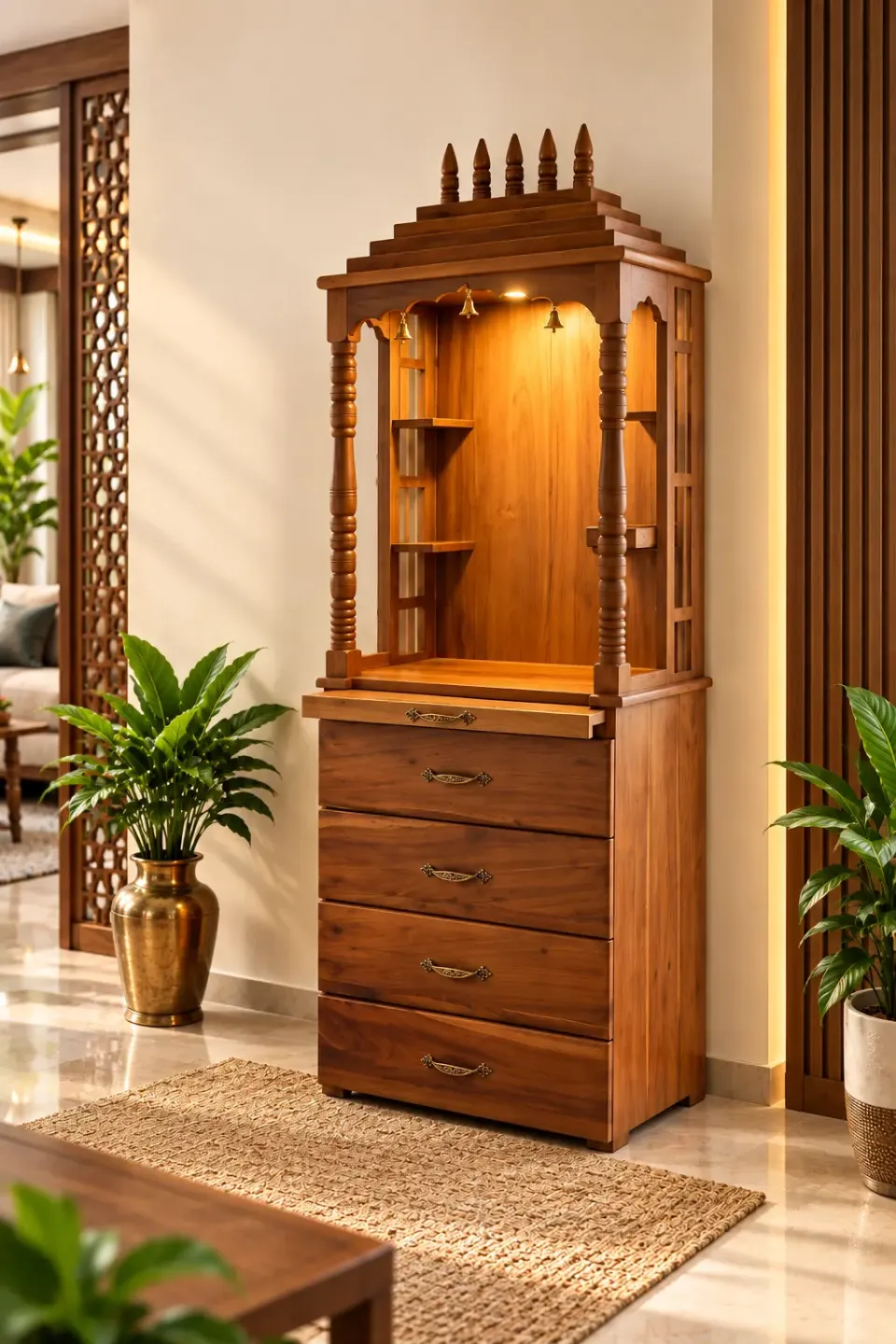
A mandir is not ordinary furniture. It stays in one place for decades, it holds weight, it lives with lamp heat and camphor smoke, and it is cleaned more often than anything else in the house. Those four things, not fashion, decide which wood suits it.
What a mandir asks of the wood
- Stability. Panels and doors must stay flat. Wood that has not been seasoned properly will cup or split, and a cracked mandir is not something anyone wants to look at every morning.
- Carving. Pillars, arches, a kalasam on top, jali work: the timber has to hold a crisp edge without crumbling.
- Heat and soot. Lamps and agarbatti mean warmth and smoke in one spot, year after year. Natural oils in the wood help the surface age rather than dry out.
- Insects and damp. A mandir often sits against a wall, sometimes an outside wall. Heartwood that resists termites matters more here than in a wardrobe standing in the middle of a room.
- Cleaning. It is wiped constantly. A finish that survives a damp cloth lasts; a thin lacquer over softwood does not.
Teak
Teak is the usual answer, and for good reasons rather than sentimental ones. It is dimensionally stable once seasoned, so doors keep closing properly years later. It carves cleanly, which is why traditional temple work and old house doors across Tamil Nadu and Kerala are teak. Its natural oils resist termites and help it cope with the heat and smoke around a lamp. It also ages well: the colour deepens instead of looking tired.
The trade-off is cost. Teak is the most expensive of the common choices, and a mandir uses more timber than people expect once you include the base, the sides, the doors and the top.
If you are choosing between types of teak, our guide on Burma, Nilambur and plantation teak explains the differences. For a mandir, well-seasoned heartwood matters far more than the origin printed on the invoice.
Rosewood
Rosewood is dense, dark and takes very fine carving, which is why it appears in heirloom pieces. It is heavy and expensive, and good rosewood is harder to find than it once was. If you want deep relief carving and the budget allows, it is a genuine alternative to teak.
Mango, rubberwood and other budget woods
These are common in ready-made mandirs because they keep the price down. They can look good when new. They are softer, they carry less natural oil, and they are more attractive to insects, so they need a protective finish maintained over the years. For a small wall-mounted mandir in a dry room they are workable; for a large floor-standing one in daily use, they are a compromise.
Plywood, MDF and "teak finish"
Most inexpensive mandirs sold online are engineered board with a printed or veneered face. Two problems follow. Edges chip and cannot be repaired, and the joints loosen if the surface ever takes moisture from cleaning. Around lamps and daily wiping, that shows quickly. If someone offers a "teak finish" mandir, ask what the wood underneath actually is - our guide on how to tell if wood is really teak lists the checks.
So which one?
- A mandir meant to outlive you: seasoned teak heartwood, or rosewood if you want the darker look and heavier carving.
- A large floor-standing mandir with doors and drawers: teak, because stability and the strength of the joints matter most.
- A small wall or corner mandir on a budget: a good solid hardwood, properly finished, rather than veneered board.
- Anything that will sit against an outside wall or in a damp corner: heartwood only, no sapwood.
Things worth asking before you buy
- Is it solid wood all the way through? Check the back and the inside of any drawer: solid timber looks the same inside as out.
- How long was the wood seasoned? This single answer predicts most future cracks.
- Is there sapwood on show? The pale outer band is not durable; on good work it has been cut away, not stained over.
- How is it joined? Proper joinery at the corners, not screws and filler.
- How is the top fixed? A heavy carved crown needs real support, not glue and pins.
- What finish is on it, and can it be re-polished? A thin polish that lets the grain show can be refreshed; a thick coating cannot.
Sizes and the shape of the room
Before anything is made, measure the space, including the height available if a crown or kalasam is planned, and decide whether the mandir stands on the floor, sits on a platform, hangs on the wall or fills a corner. Then think about how it is used: room for a lamp and a plate, a shelf for books, a drawer for wicks and camphor, doors or an open front. A piece built to your measurements uses the space far better than a standard size that nearly fits.
Looking after it
- Wipe with a dry or barely damp cloth; keep water away from joints.
- Stand lamps on a metal or stone plate rather than directly on the wood.
- Let smoke escape - a mandir sealed into a tight cupboard collects soot on every surface.
- Re-polish every few years instead of stripping and recoating.
Made to your size
We saw our own teak at our yard in Tenkasi and make furniture from it in our workshop, so a mandir can be built to your measurements, in the wood and finish you choose, with as much or as little carving as you want. Send us the space you have - height, width and depth - and a photo of the corner, and we will tell you what it would take.
See our teak wood furniture, read the buying guide, or send us a design you have in mind.